

WASHINGTON (CN) - The Donald Trump administration on Thursday continued to avoid providing a federal court with the details of several deportation flights it conducted over the weekend, arguing it needs more time to decide whether to invoke national security privileges over the information.
U.S. District Judge James Boasberg issued a temporary order on Saturday blocking the White House from carrying out deportation flights for hundreds of Venezuelan migrants. But some planes carrying deportees still left U.S. soil and landed in El Salvador, possibly violating the judge's mandate.
Boasberg, who sits on the U.S. District Court for the District of Columbia, had demanded that the Trump administration explain the circumstances of those outstanding flights by Wednesday. But the Justice Department secured an extension, suggesting that the White House could invoke a state secrets privilege over information it said could raise national security concerns.
The administration had until noon Thursday to make that determination. But, in a court order filed Thursday afternoon, Boasberg said that the government had "again evaded its obligations" by requesting even more additional time.
The Justice Department, he wrote, submitted a six-paragraph declaration from the acting director of deportation operations at a field office run by U.S. Immigration and Customs Enforcement, who told the court that "cabinet secretaries" were currently considering whether to invoke the state secrets privilege.
"Doing so is a serious matter that required careful consideration of national security and foreign relations, and it cannot properly be undertaken in just 24 hours," the field office director said in the statement, as quoted in the court order.
The ICE official, Boasberg added, repeated the basic facts of the issue at hand: two deportation flights departed U.S. airspace before the judge's written order blocking such action - raising questions about whether the Trump administration should have allowed those flights to land in El Salvador.
But Boasberg said that the Justice Department's submission was "woefully inefficient."
"[T]he government cannot proffer a regional ICE official to attest to cabinet-level discussions of the state-secrets privilege," he wrote, pointing out that the field office director's comments were based solely on an unsubstantiated understanding of the situation in Washington.
While he said he remained skeptical of the use of state secrets privilege over information on the deportation flights, Boasberg said he would give the White House extra time to prove such deliberations were taking place - demanding that the administration submit a sworn statement from an official "with direct involvement."
The Justice Department has until Friday morning to submit that statement, Boasberg said, adding that by Tuesday the administration must decide whether to invoke state secrets privilege - as well as file a brief explaining why the deportation flights that were allowed to depart did not violate his temporary restraining order.
The Trump administration, which campaigned on mass deportations, has cited a 1798 wartime law known as the Alien Enemy Act as legal backing for its executive order to round up and remove Venezuelan migrants, who they've accused of being members of the transnational gang Tren de Aragua.
But the plaintiffs challenging the White House order have argued that the Alien Enemy Act applies only to citizens or denizens of a foreign nation during an invasion or an incursion. Tren de Aragua, they point out, is a non-state entity and is not actively invading the U.S. in a way that would warrant the use of a wartime law.
They've also argued that Trump's executive order violates the Immigration and Nationality Act by steamrolling the authority of immigration judges to make final decisions on deportation. And the move, they say, also violated deportees' right to due process - many of the people who have been arrested by ICE had no existing order for their removal and were deported without a hearing before a judge.
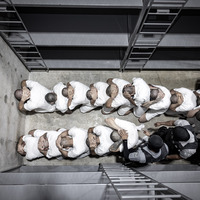
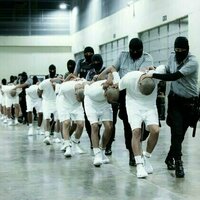
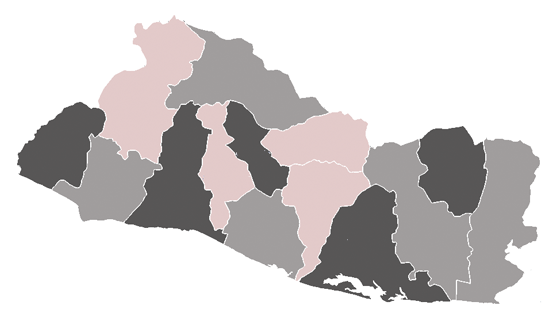
The White House, meanwhile had planned to send hundreds of Venezuelans to prisons in El Salvador. And despite the Saturday order blocking such deportations - and Boasberg's verbal command that flights already in the air be turned around - at least two planes managed to reach their destination.
Salvadorean President Nayib Bukele on Sunday shared video clips on social media of police in tactical gear removing migrants from planes. "Oopsie ... Too late," he wrote in the video's caption, an apparent reference to Boasberg's court order.
Source: Courthouse News Service