

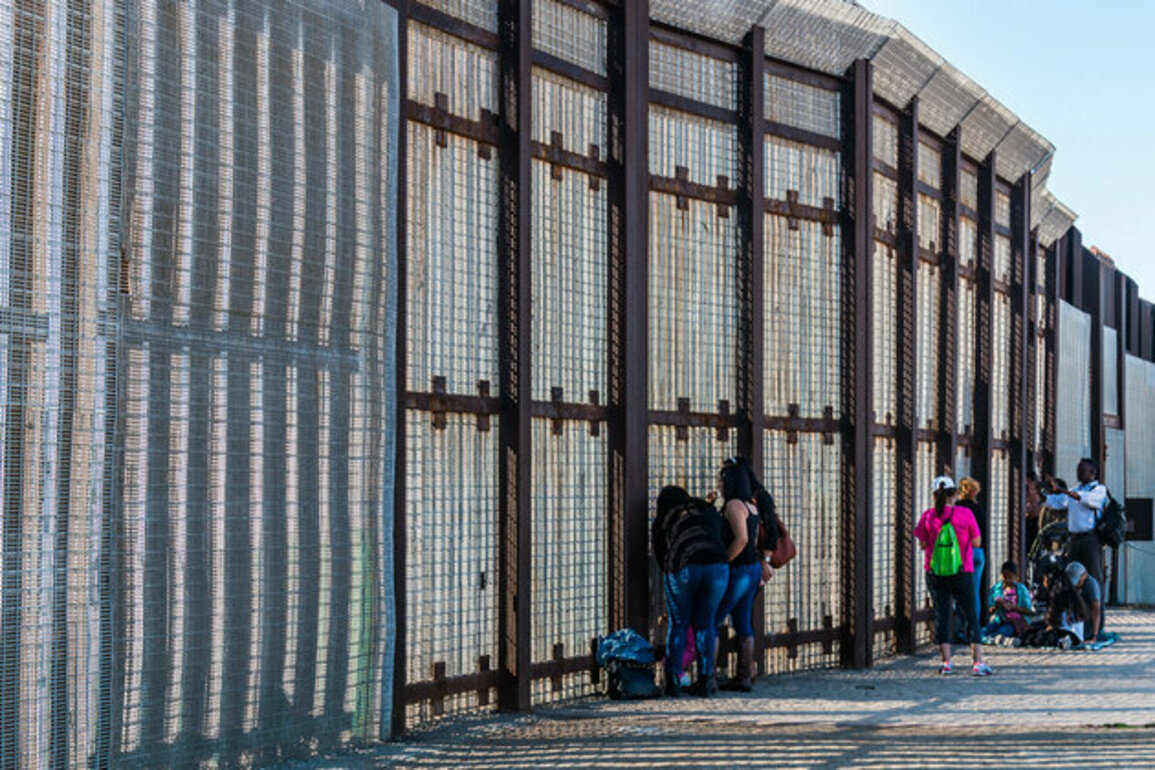
By escalating deportations, ending humanitarian protections, and cutting remittances, Trumps immigration policy threatens to destabilize Latin American economies and exacerbate humanitarian crises. Ironically, this might trigger a new wave of migration.
By John Perry and Roger D. Harris
The importance of Latinos living and working in the US is enormous: if they were in a separate country, it would be the worldsfifth largest economy, bigger than even India. President Trump is recklessly attacking Latino migrants, inflicting calculated cruelty and disregarding the consequences for their home countries.
Disastrously, US immigration policy affects the very victims of Washingtons destabilization campaigns in Latin America and Caribbean, which drive people to leave their homelands in the first place. In effect, by exporting chaos, the hegemon paradoxically ends up importing immigrants. Then, the US contradicts itself by claiming that sanctioned countries are deemed safe for deportation.
Further, implementation is selective, privileging right-wing allies and punishing progressive states. The economic fallout from reduced remittances and mass deportations is not only politically opportunistic but has grave humanitarian consequences.
Take the case of Haiti, which Human Rights Watchsaysis on the edge of collapse. Armed gangs control most of the capital, over a million Haitians have been displaced and there is acute food insecurity. The State Departmentstravel advisoryputs Haiti at its highest level of risk (level 4): avoid travelling there because gun crime is common and kidnapping is widespread.
Yet, over at Homeland Security, Haiti isdeclaredsafe for people to return. Secretary Kristi Noem wants to force 348,000 Haitians who havetemporary protected status(TPS) and another 211,000 who havehumanitarian paroleto leave for whatBlack Agenda Radiodescribes as a country in turmoil.
Migrants a threat worse than communism to nativist America
Under President Biden, Washingtons ideology-driven immigration policy led to the humanitarian parole program. Citizens of the targeted countries Cuba, Nicaragua and Venezuela were said to befleeing communismand warranted preferential treatment. Trump has ended the parole scheme for those countries and the TPS protection for Nicaraguans and Venezuelans (Cubans never had TPS protection), yet their revolutionary governments now suffer even tougher US coercive economic measures than with Biden.
ComeTrumps second term, US immigration policy sharply limits the pathways for Cubans to enter the US legally. Over a half a million Cubans in the US lost their status and work permission with the termination of humanitarian parole. Visa restrictions limit family, student, and visitor entry. US Immigration and Customs Enforcement (ICE) is now allowed to deport Cubans and other migrants to countries other than their own, with as little as six hours notice. Meanwhile US-Cuba bilateral immigration talks are indefinitely suspended.
Trumps malice against Cuba a nation already teetering under the six-decade illegal US blockade is causing a mounting humanitarian crisis. Tightening the economic embargo followed further restrictions on foreign investment and expanded sanctions. Bidens earlier attempts to strangle the Cuban economycut remittancessent by migrants from about $800 million in 2019 to just $35 million by May 2024. Trumps new measures couldseverthe lifelinecompletely.
Meanwhile Nicaragua, which has 93,000 in the parole scheme and about 4,000 under TPS, is deemed safe enough for its citizens to return home,accordingto US Homeland Security:
Nicaragua has become a worldwide tourist destination, while also promoting sustainability and revitalizing local communities. Technological innovation is empowering local farmers and fishers, making the agriculture industry more competitive and profitable Nicaragua continues to show stable macroeconomic fundamentals, including a record-high $5 billion in foreign reserves, a sustainable debt load, and a well-capitalized banking sector.
No one seems to have told Kristi Noem that her cabinet colleague Marco Rubioregards Nicaraguaas an enemy of humanity. His officialsbriefedthe New York Times that the country was perilous for tourists.
Last month, President Daniel OrtegareassuredNicaraguans that the countrys doors are open, urging them to leave the terror of the US. Nicaraguan Eddy Garca, who along with 77 others arrived on a deportation flight in February,saidthat they were welcomed by officials, given refreshments and then offered transport home: I'm extremely happy to be back because now no one is going to throw me out.
Opponents of Nicaraguas Sandinista government have, until Trumps shift in policy,chorusedthat an unprecedented wave of migrants fled the country as a result of government repression following the failed coup attempt in 2018. Opposition figures are struggling to explain why, if this were the case, so few Nicaraguans are being sent back. In the six months until June, they accounted for less than one percent of the 239,000 migrants deported.
Another political shift has been themarked hostilityto Venezuelan migrants. By the end of Bidens term, over half a million Venezuelans had been accepted under TPS and 117,000 given humanitarian parole. Under Trump, these Venezuelans are denounced for invading the US. Some are even accused of being affiliated to the violent Tren de Aragua gang which, Trumpbaselessly asserted, is directed by Nicolas Maduros government.
Meanwhile, US-Venezuelatalks on migrationcontinue. The Venezuelan government, for its part, has welcomed returning migrants under its "Return to the Homeland Plan." Over 200 Venezuelans dubiously linked to gangs, incarcerated and tortured in El Salvadors CECOT prison, have recently beenfreed. Caracass other priority is toreunite children, thrust into foster care in the US, back with their deported Venezuelan parents.
Driven out by ICE
Apart from the prospect of beingdispatchedto one of El Salvadorsnotorious prisonsor beingabandonedto an unknown fate in a remote country like South Sudan, thousands of Latino migrants are leaving the US on their own faced withescalating threatsfrom ICE.
Wilfredo, from the city of Masaya, Nicaragua, had voluntarily flown back from Miami with two others. Many more Nicaraguans were on the same flight anxious to leave, he told us, before ICE officials kidnapped them, took all their belongings and put them, handcuffed, on deportation flights. The American Dream has become a nightmare, he said.
Even long-time naturalized citizens in the US areterrorized. In liberal Marin County, CA, Venezuelan-born Claudia now takes her passport with her whenever she leaves the house for fear of being seized. Itshappened alreadyto other naturalized citizens.
Costa RicaandPanamawere persuaded by Trump to accept around 500 deported asylum seekers from third countries as diverse as Iran, Cameroon and Vietnam. These migrants are now in limbo, receive little assistance and in most cases are unable to speak Spanish. Those in Panama have been pressured to accept repatriation flights but many face persecution if they return to their home countries.
Duplicitous immigration policy
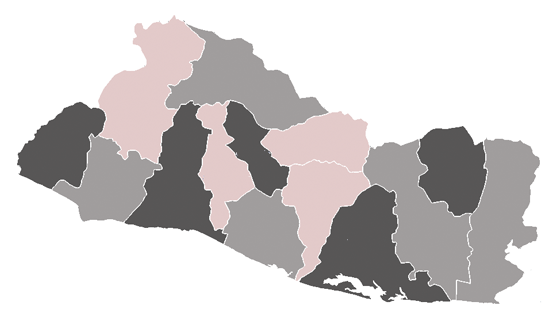
The treatment of migrants from most Latin American countries contrasts sharply with Washingtons approach towards El Salvador. It has 174,000 citizens living in the US with TPS and like Haiti this protection was offered after the country suffered severe earthquake damage. However, El Salvador has been conveniently judged as unable to accept the return of so many of its citizens; their TPS continues.
Despite the supposedly unsafe conditions used to justify TPS, the State Department downgraded the risk of travel to El Salvador to its lowest level, ranking it as one of the safest countries in Latin America. Just got the US State Departments travel gold star: Level 1: safest it gets, Bukeleboasted.
Remittances from the countrysestimated1.4 million migrants in the US provide El Salvador with a vital23.5%of its national income. Bukeles White Housevisits,hostingMarco Rubio at his home and, above all, incarcerating migrants on behalf of the US along with groveling before Trump paid off.
In a further attack on migrants, Trump is hitting them with new taxes on the remittances they send, whichprovide 23%of Central Americas GDP. Migrants struggling for survival are taxed in this way while the wealthy can move money abroad through bank wires, investment accounts, shell companies, and real estate purchases without similar penalties.
Many Latin American economies will be further strained by a combination of falling remittances, returning migrants who initially lack jobs, and, in some cases, harsher economic sanctions. Meanwhile, their exports to the US are being hit by new tariffs. Trump appears to be exacerbating the economic conditions that drove many migrants north under his predecessors administration.
Nicaragua-basedJohn Perryis with theNicaragua Solidarity Coalitionand writes for the Grayzone, London Review of Books, FAIR, and CovertAction.Roger D. Harrisis with theTask Force on the Americas, theUS Peace Council, and theVenezuela Solidarity Network.
Pressenza New York