

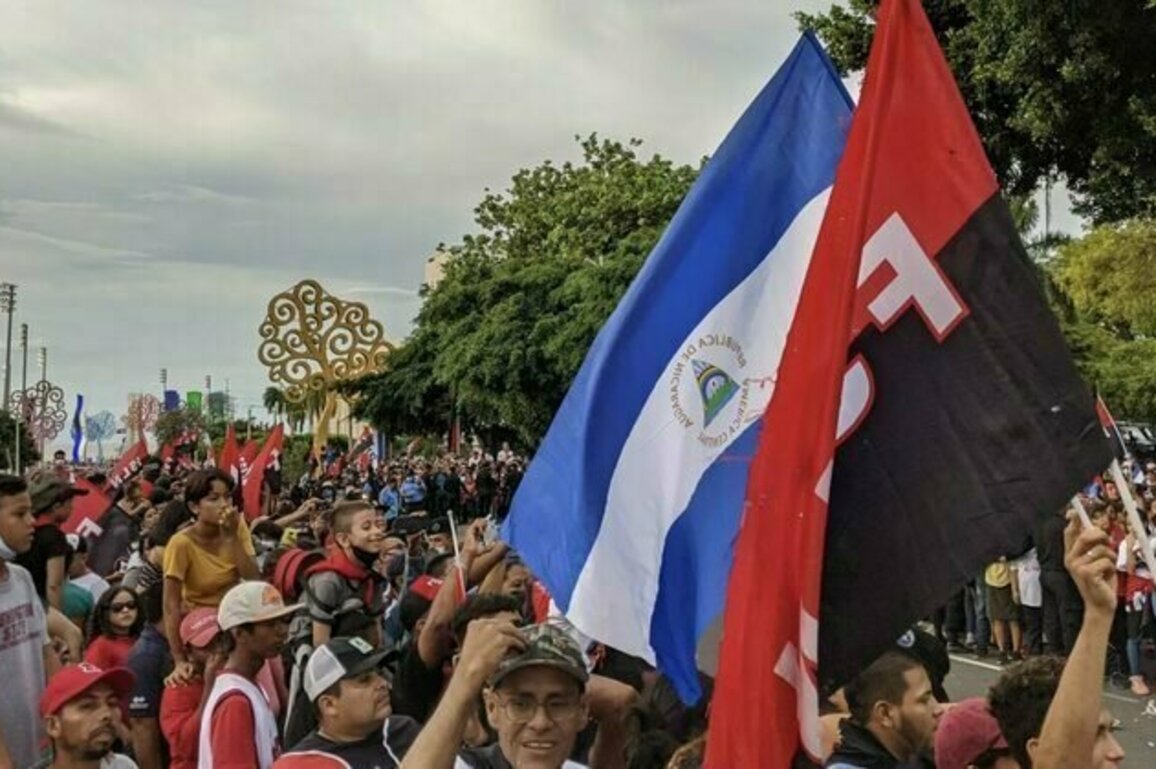
The spied upon headline from El Pais is unequivocal. The story, in the newspapersEnglish-language edition, says that Nicaraguans live in a climate of permanent surveillance in which they distrust even their neighbors. Further, apparently harmless community meetings are really a mechanism of social control where they feel watched. El Pais sources a survey carried out independently by an organization called Hagamos Democracia (Lets Make Democracy), based in Costa Rica. Its president, Jess Tefel, says that people cant express opinions openly for fear of being betrayed. El Paiss conclusion is that Nicaraguans live under constant surveillance and repression.
By John Perry and Francisco Dominguez
Is this true or is it fake news? To probe this question, lets first take a look at the author of the article and the main sources used.
Wilfredo Miranda, the journalist, is a Nicaraguan based in Costa Rica. Hes written23 articlesfor El Pais in the past twelve months, all but two of them negative stories about Nicaraguas government. This is hardly surprising since his career has been entirely in opposition news outlets, such as Divergentes, which he founded, and Confidencial. The latter is owned by the wealthy Nicaraguan family of the Chamorros, who receivedat least $7 million from USAIDto promote opposition media in the run up to the attempted coup in Nicaragua in 2018. Miranda has also written for the UKGuardianand for theWashington Post.
Hagamos Democraciais a non-governmental organization (NGO), founded in 1995 in Nicaragua, closed by the government in December 2018 and now based in Costa Rica. Its funding sources prior to its closure includedUSAID(US$801,390) and theNational Endowment for Democracy(US$525,000). In Costa Rica itreceivedUS $1,114,000 from Washington to work with exiled political activists. Its sparsewebsiteclaims the NGO is independent. It says nothing about its funding sources or how its run.
Jess Tefel, a Nicaraguan exiled in Costa Rica, became the organizations president in 2024. Tefel is a founder of one of Nicaraguas main opposition political parties and part of an initiative called Monteverde, which is attempting to unite these diverse groups.
Behind Hagamos Democracia isLuciano "Chano" Garca, alleged to havebought its presidency in 2017until he stood down in Tefels favor last year. Chano is a long-time opponent of Nicaraguas Sandinista government and a relative of former dictator Anastasio Somoza. Anorganizerof the coup attempt in 2018, he recruited known violent, criminals, called for the overthrow of the government and campaigned for police officers to desert their posts. When the coup attempt failed, he fled to Costa Rica,allegedlywith the help of a CIA agent. Chano is accused by Nicaraguas attorney general of organized crime, terrorism, and conspiracy against the constitutional order.
Second, lets look at the survey itself. How was it carried out when the population is supposedly under constant surveillance"? How can Hagamos Democracia conduct a survey in a different country? We do not know because the survey has not been published, but previous surveyshave been. Heres how they work:
- Typically they have 400 respondents out of Nicaraguas 7 million population, the bare minimum to ensure reasonable confidence in the results, provided that the sample is truly random.
- But it isnt: surveys are done using Whatsapp or Signal, limiting their coverage to people with smartphones who use those apps, excluding huge numbers of the governments working-class supporters.
- Respondents then have to fill in a Google questionnaire with around 45 questions a further barrier, limiting the survey to those with the necessary skills and familiarity with such forms.
- Worse still, assuming that those carrying out the survey say who they work for, many Sandinista sympathizers would simply hang up on hearing the words Hagamos Democracia.
Third, lets look at the timing: the survey was carried out July 18 to 23 this year, precisely the weekend when millions of Nicaraguans were celebrating the 46th anniversary of the Sandinista revolution. There could hardly be a worse moment to carry out a balanced survey that required detailed attention to a survey form.
Faced with all these facts, an objective observer would surely conclude that the survey is political propaganda and that a responsible newspaper would have ignored it.
In any case, a thoughtful reader might ask, if these neighborhood meetings are a mechanism of social control, why do people go to them? The reality is that, while naturally their effectiveness varies, many are excellent examples of grassroots democracy, designed to hold public services to account. For example, in the city of Masaya one barrio committee has been pushing for better garbage-collecting services and assists the local health center in ensuring that local people with chronic illnesses get treatment. A typical meeting in this barrio sees 100-200 neighbors listening to and questioning officials in a friendly atmosphere, far from the repression portrayed by El Pais. Such levels of participation should be the envy of western democracies, rather than being scorned.
El Pais also fails to set the context for the issues covered in the article. If readers knew that Nicaragua had suffered a violent, US-funded coup attempt in 2018, in which over 200 ordinary people and 22 police officers were killed in opposition violence that continued for three months, they might appreciate why a degree of vigilance is required.
This omission is not surprising. El Paiss demonization of Nicaragua goes back a long way. It unashamedlysupportedthe 2018 rebellion and glorified the US-funded violence. Many of its articles about Nicaragua, like this one, appear to ignore its ownethical codeabout balanced reporting.
El Pais ridicules President Ortegas warning in July of growing threats from Washington, against a country whose defense budget is one of the smallest in the Americas. Yet the warning resonates with many Nicaraguans who want no repetition of 2018s violence. Most regard Nicaraguas standing as one of Latin Americas safest countries to be worth protecting and view with alarm the growing lawlessness in next-door Costa Rica (over 500 homicides in 2025 so far).
Readers might also wonder why El Pais singles out Nicaragua, when its readers in the West really are under permanent surveillance. According to some studies, those in the USA are caught on surveillance cameras34 times a day, while for people in the UK thenumber doubles. SpainusesIsraeli Pegasus spyware against those pushing for an independent Catalonia. And, of course, secret surveillance of our phone calls and emails has been revealed as widespread by Edward Snowden and other whistleblowers.
The irony of El Paiss article is that, unconsciously, it pays a backhanded compliment to a country where according to this fake news survey only 90% of Nicaraguans feel spied upon.
Nicaragua-based John Perry is with the Nicaragua Solidarity Coalition and writes for MR Online, the London Review of Books, FAIR and Covert Action, among others.
Francisco Dominguez is national secretary of the UK-based Venezuela Solidarity Campaign.
Pressenza New York