

(CN) - European Commission President Ursula von der Leyen and European Council President Antonio Costa signed a landmark trade agreement with South American nations Saturday, creating the world's largest free-trade zone covering more than 700 million people.
The ceremony in Paraguay's capital brought together leaders from the EU and Mercosur - the South American trade bloc of Argentina, Brazil, Paraguay and Uruguay. They finalized an agreement the European Commission adopted in September, and EU member states approved last week.
"We are creating the largest free trade zone in the world, a market worth almost 20% of global GDP," von der Leyen said at the signing ceremony in Asuncion. "This agreement sends a strong signal to the world. It reflects a clear and deliberate choice. We choose fair trade over tariffs, we choose a productive, long-term partnership."
Costa framed the agreement as a rebuke to rising protectionism. "While some raise barriers and others violate fair competition rules, we build bridges and agree on norms," he said. "We do not aspire to create spheres of influence, but spheres of shared prosperity."
The deal eliminates tariffs on 91% of goods traded between the blocs. Germany and Spain were key backers, seeking to diversify trade and reduce reliance on China for critical minerals. EU officials estimate the agreement will lift exports to the region by nearly 40%, or about 49 billion euros ($54 billion) a year, supporting more than 440,000 export-related jobs and saving businesses roughly 4 billion euros annually in duties.
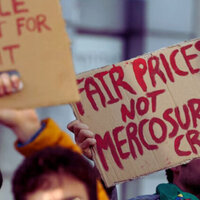
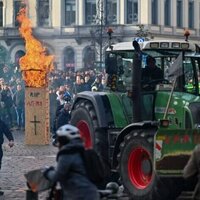
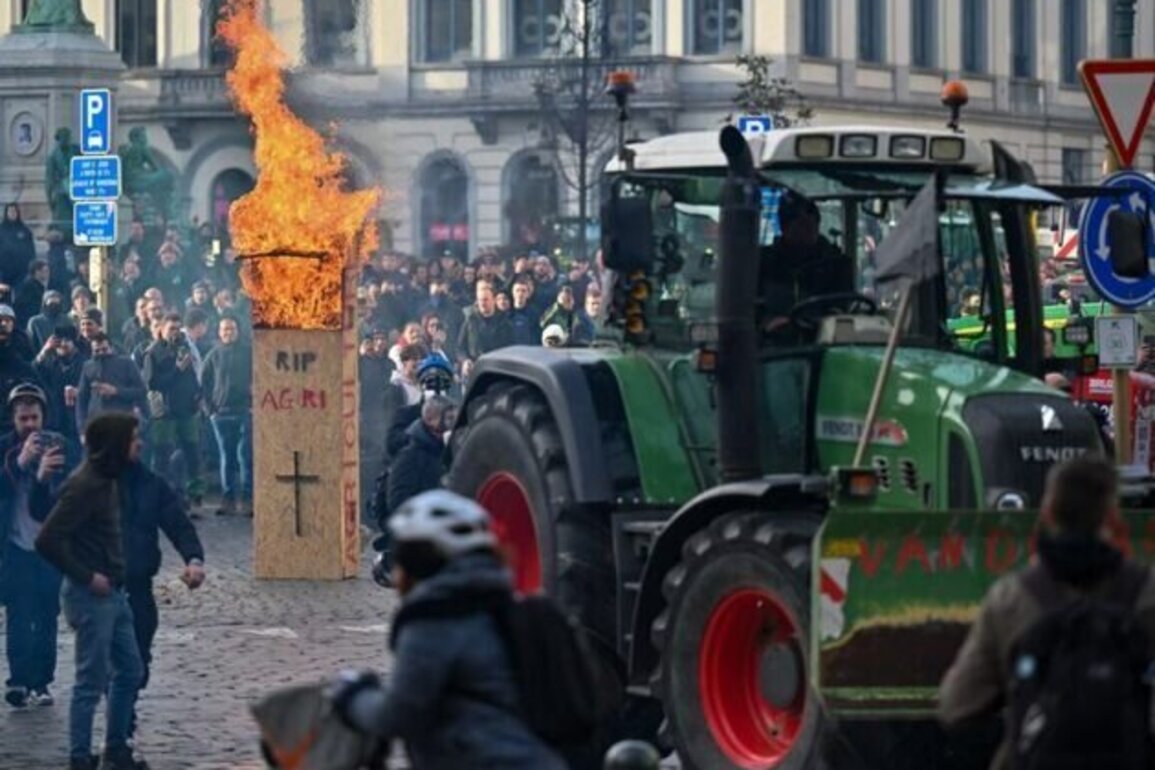
EU agri-food exports to Mercosur could rise by as much as 50% - including wine, spirits, dairy and olive oil - even as French farmers protest the deal over fears of increased South American competition.
Europe is also using the agreement to hedge against a less predictable U.S. trade relationship. EU officials say Trump's tariff offensive pushed the 25-year Mercosur negotiation over the finish line. EU exports to the United States fell 20% year-on-year in November, despite a July framework agreement that capped most U.S. tariffs on EU goods at 15%, according to Eurostat.
For U.S. companies, the deal creates new competitive pressure in a region long shaped by American influence. European automakers and machinery exporters will gain the same tariff-free access U.S. firms have relied on, while European pharmaceutical and chemical producers gain an advantage in markets where U.S. products now compete.
France and Italy nearly derailed the agreement in December, prompting von der Leyen to postpone a planned signing in Brazil. EU member states approved the deal last week, though France, Poland, Austria, Hungary and Ireland voted against it, and Belgium abstained.
The timing also carries geopolitical weight. China surpassed Europe as Mercosur's largest trading partner in 2017 and has since expanded its investment footprint, leaving the United States in third place.
"The geopolitical importance of this agreement cannot be overstated," said Von der Leyen. "[When] our two regions speak with one voice on global issues, the world will listen."
Brazilian President Luiz Inacio Lula da Silva emphasized his country's ambitions beyond raw materials. "We are already major agricultural product providers to the European Union, but we will not limit ourselves to the eternal role of commodity exporters," he said. "We want to produce and sell higher value-added industrial goods."
The deal targets Europe's reliance on foreign resources. Brazil controls nearly 89% of global niobium processing - vital for high-strength steel and superconducting magnets - and also supplies lithium, graphite and other materials critical to electric vehicle batteries and solar panels. Argentina is another major lithium producer.
The agreement removes export taxes and bans export monopolies on these critical materials, giving European companies more predictable access for green energy and defense needs while reducing dependence on China-dominated supply chains.
Speaking in Rio de Janeiro on Friday, von der Leyen said Europe and Brazil are pursuing a separate agreement on critical minerals, including lithium, nickel and rare earths. "Europe will gain improved access to the raw materials we need for our transition," she said at the signing ceremony, calling such access essential "for our strategic independence in a world where minerals tend to become an instrument of coercion."
In return, the deal phases out 35% tariffs on European cars over 15 years and removes similarly steep tariffs on machinery and pharmaceuticals. The Commission estimates car exports alone could gain more than 20.7 billion euros once the agreement is fully in force.
By 2040, the deal is expected to raise EU economic output by about 77.6 billion euros a year.
But analysts at ING Think, a Brussels-based economic research group, say the deal's overall economic impact remains modest. They project EU GDP will increase by only 0.1% by 2032.
Brussels-based analysts agree the deal's real significance lies beyond the modest economic projections. "For the EU, this is not just about trade - it's about securing strategic resources and counterbalancing global competitors," wrote analysts at ING Think.
The European Policy Centre, another Brussels think tank, agrees. "Against a backdrop of Trumpian tariffs, coercion and unilateralism, the Mercosur agreement signals that negotiated, rules-based and beneficial trade deals are still possible," they wrote.
But Saturday's celebration masks fierce political resistance in Europe that nearly killed the agreement. French farmers have led vocal opposition, fearing cheap South American beef and poultry will undercut them. France demanded delays in December, with Italy swinging behind Paris shortly after.
To win their support, the EU committed 6.3 billion euros to a farmer safety net fund starting in 2028 - an additional layer of protection in case of market disruptions from South American imports.
In December, the European Parliament moved to shield European agriculture by creating a quick trigger mechanism. If imports rise by just 5% or prices fall by the same margin below EU levels, Brussels can launch an investigation and potentially block the products. Lawmakers also want Mercosur producers to meet EU environmental and labor standards.
The Commission sought to calm concerns, saying South American agricultural imports would account for only 1.5% of EU beef consumption and 1.3% of poultry consumption. Opposition to the deal, however, remains strong.
More than 145 lawmakers across party lines plan to seek a legal opinion from the EU's Court of Justice, a move that could delay implementation until summer 2027 or even 2028.
Environmental activists remain equally critical. Frances Verkamp, trade campaigner at Friends of the Earth Europe, described the deal as "all-round toxic," saying the European Commission is "playing a game of imperial dominance in global trade with China and the U.S. that wins nothing for workers or consumers - and even less for nature and climate."
The EU now has 44 trade agreements covering 76 countries, including Indonesia, Mexico and Mercosur, many concluded or advanced in the past year, and is negotiating with India and four other partners. The Mercosur agreement aligns with von der Leyen's strategy of building ties with "like-minded" nations, including deeper engagement with a Pacific trade bloc that includes Japan, Canada and Australia.
The deal follows a familiar EU-Latin America trade pattern: Europe exports high-value goods such as cars and machinery, while South America supplies raw materials and agricultural products. According to Eurostat, agricultural goods make up about 43% of South American exports to Europe, followed by raw materials and minerals at 31% and paper products at 7%. Europe's exports are led by machinery (28%), chemicals and pharmaceuticals (25%) and transport equipment (12%).
Critics warn this reinforces South America's commodity dependence and shifts environmental costs onto the region, since European buyers aren't held to the same environmental standards as domestic producers.
Negotiations began in 2000 but stalled repeatedly until gaining fresh momentum in 2016. The deal marks Europe's biggest trade expansion into Latin America in decades - if it survives the ratification process and potential legal challenges.
Courthouse News correspondent Yuval Molina is based in Brussels, Belgium.
Source: Courthouse News Service